
Use this quick comparison to understand the differences between common types of learning towers. Prices typically range from $80–$250 depending on material, adjustability, and brand.
Learning Towers: The Ultimate Safety & Buying Guide
Discover how a learning tower (kitchen helper) can safely involve your child in cooking, baking, and daily routines. Compare materials, safety features, weight limits, and find the perfect height-adjustable stool for your little one.
Shop Top Learning Towers →Why a Learning Tower? More than just a step stool, a learning tower (or kitchen helper) is a safe, elevated platform designed for toddlers and young children. It allows them to participate in kitchen activities at counter height, fostering independence, motor skills, and family bonding. Unlike a standard chair or stool, learning towers feature safety rails and a sturdy base to prevent falls.
What to Look For in a Learning Tower
🛡️ Safety Rails
Full 360° or 3-sided rails keep your child secure while standing. Look for rounded edges and non-toxic finishes.
⚖️ Weight Capacity
Most towers support 100–200 lbs. Check the max weight for your child's current and future size.
📏 Height Adjustability
Adjustable platforms (typically 2–4 height levels) let the tower grow with your child from 18 months to 5+ years.
🧹 Easy to Clean
Wood or plastic surfaces should wipe clean easily. Removable trays or mats are a bonus for messy activities.
🪵 Material & Build
Solid wood (birch, pine, or beech) offers durability and stability. Some models use BPA-free plastic for lightweight portability.
🔄 Convertible Designs
Some learning towers convert into a play desk, art easel, or even a small table and chair set for extended use.
Learning Tower Comparison: Key Specs
| Feature | Solid Wood (Premium) | Plywood / MDF (Mid-Range) | Plastic / Foldable (Budget) |
|---|---|---|---|
| Material | Birch, Beech, Pine | Engineered wood with veneer | BPA-free plastic, steel frame |
| Weight Capacity | 150–200 lbs | 120–150 lbs | 80–120 lbs |
| Height Adjustable | Yes (3–5 levels) | Yes (2–3 levels) | Often no, or 1–2 levels |
| Safety Rails | Full 3–4 sides | 3 sides (one open for entry) | 2–3 sides, sometimes removable |
| Best For | Long-term use, multiple children | Moderate use, smaller kitchens | Travel, occasional use, small spaces |
| Price Range | $150–$250 | $100–$160 | $60–$100 |
Choosing the Right Learning Tower for Your Child
Investing in a learning tower is one of the most practical decisions you can make for your child's development and your kitchen routine. But with so many options available, it's essential to know what features truly matter for safety, longevity, and everyday use. This guide breaks down everything you need to consider before buying.
1. Safety First: Rails, Stability, and Non-Slip Feet
The primary purpose of a learning tower is to provide a safe elevated space for your child. Look for models with full or 3-sided rails that are high enough (at least 2–3 inches above the child's waist when standing) to prevent tipping. The base should be wide and sturdy, with non-slip rubber feet to keep the tower firmly in place on tile or wood floors. Avoid towers with sharp edges or exposed screws. All finishes should be non-toxic and lead-free, as children often touch and mouth surfaces.
2. Height Adjustability and Weight Limits
A height-adjustable platform is a game-changer. It allows the tower to adapt as your child grows, typically from around 18 months up to 5 or 6 years old. Most quality towers offer 3 to 5 height settings. Always check the manufacturer's specified weight limit — a higher limit (150+ lbs) indicates a more robust build and often means the tower can be used by older siblings or even adults in a pinch. If you plan to use the tower for multiple children, choose a model with a generous weight capacity.
3. Material Quality and Durability
Ladder back style or solid wood towers are the gold standard for durability. Birch and beech are common choices that resist warping and hold up to daily wear. Plywood or MDF towers are more affordable but may not last as long with heavy use. If you prefer a lightweight option for portability, some high-quality plastic towers are available — just ensure they are BPA-free and have a stable base. For a more coastal or modern aesthetic, look for towers with a smooth painted finish or natural wood grain.
4. Ease of Cleaning and Maintenance
Kids are messy, especially in the kitchen. A learning tower with a smooth, sealed surface (like laminated plywood or varnished wood) is much easier to wipe down after flour spills or paint projects. Some models feature a removable tray or mat that can be washed separately. If the tower has fabric parts or padding, make sure they are removable and machine-washable. Regular maintenance includes checking screws and bolts for tightness every few weeks.
5. Convertible & Multi-Functional Designs
To get the most value, consider a learning tower that converts into another piece of furniture. Some popular designs transform into a play desk, a mini art easel, or a small table and chair set. This extends the lifespan of the product well beyond the toddler years. If you're tight on space, a foldable or collapsible learning tower can be stored away when not in use, though it may sacrifice some stability compared to fixed-frame models.
6. Where to Place Your Learning Tower
While the kitchen is the most common spot, learning towers can also be used in the bathroom for sink access, in the garage for simple projects, or in the playroom as a standing activity table. Ensure the floor surface is even and not slippery. If you have kitchen area rugs, make sure the tower's feet rest securely on a hard, level surface to prevent wobbling.
7. Assembly and Portability
Most learning towers require some assembly. Look for models with clear instructions and minimal tools required. If you plan to move the tower between rooms, consider a lighter weight option (under 15 lbs) or one with built-in handles. However, remember that heavier towers (20–30 lbs) tend to be more stable. Some brands offer ready-to-assemble or even pre-assembled units for an extra fee.
By carefully evaluating these factors — safety, adjustability, material, and versatility — you'll find a learning tower that serves your family well for years. A well-chosen tower not only keeps your child safe but also encourages active participation in family life, building confidence and valuable life skills.
Best Learning Towers for Every Kitchen
⚠️ AFFILIATE DISCLOSURE: This website contains affiliate links. As an affiliate Associate, we earn from qualifying purchases. If you make a purchase through these links, we may receive a small commission at no additional cost to you. Read our full affiliate policy.
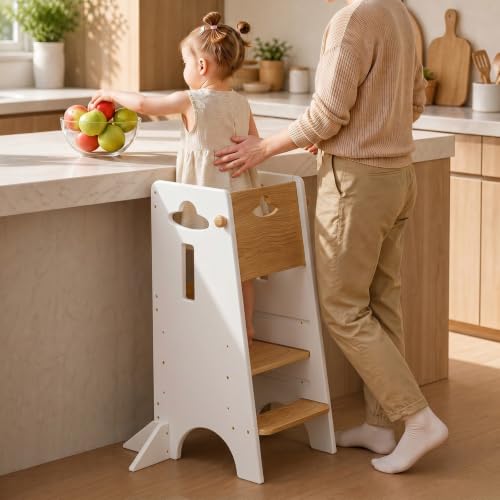
COSYLAND Toddler Tower Toddler Standing Kitchen Stool
$66.49
Price as of 2026-10-06 20:23:11
Buy on Amazon
⚠️ Note: The purchase links above are affiliate links. As an Amazon Associate, we earn from qualifying purchases at no additional cost to you.

OMEW Toddler Standing Tower Anti-Tip Wooden Kitchen Step Stool,Nature
$58.99
Price as of 2026-10-06 20:23:11
Buy on Amazon
⚠️ Note: The purchase links above are affiliate links. As an Amazon Associate, we earn from qualifying purchases at no additional cost to you.

labebe Toddler Standing Tower for 12M+, Montessori Foldable Learning Standing Tower with Blackboard, Anti-tip Structure Design,Wooden Kitchen Step Helper Stool for 1-3 Year Old Boy Girl Gift
$59.99
Price as of 2026-10-06 20:23:11
Buy on Amazon
⚠️ Note: The purchase links above are affiliate links. As an Amazon Associate, we earn from qualifying purchases at no additional cost to you.

Toddler Tower with Sliding Door - 3 Adjustable Heights - 2026 Design Gray
$110.49
Price as of 2026-10-06 20:23:11
Buy on Amazon
⚠️ Note: The purchase links above are affiliate links. As an Amazon Associate, we earn from qualifying purchases at no additional cost to you.

COSYLAND Toddler Standing Tower - Adjustable Height Kitchen Stool Helper
$50.57
Price as of 2026-10-06 20:23:11
Buy on Amazon
⚠️ Note: The purchase links above are affiliate links. As an Amazon Associate, we earn from qualifying purchases at no additional cost to you.

labebe Toddler Standing Tower for 12M+, Montessori Foldable Learning Standing Tower with Blackboard, Anti-tip Structure Design,Wooden Kitchen Step Helper Stool for 1-3 Year Old Boy Girl Gift
$48.44
Price as of 2026-10-06 20:23:11
Buy on Amazon
⚠️ Note: The purchase links above are affiliate links. As an Amazon Associate, we earn from qualifying purchases at no additional cost to you.

Toddler Tower with Sliding Door - 3 Adjustable Heights - Varnished
$110.49
Price as of 2026-10-06 20:23:11
Buy on Amazon
⚠️ Note: The purchase links above are affiliate links. As an Amazon Associate, we earn from qualifying purchases at no additional cost to you.

COSYLAND Foldi Foldable Toddler Kitchen Stool - Adjustable Height Toddler Standing Tower with Net & Safety Feet, IF Award-Winning Wooden Learning Step Tower for Kids 18M-6Y, Black & Natural
$59.99
Price as of 2026-10-06 20:23:11
Buy on Amazon
⚠️ Note: The purchase links above are affiliate links. As an Amazon Associate, we earn from qualifying purchases at no additional cost to you.
Frequently Asked Questions About Learning Towers
At what age can a child start using a learning tower?
Most children can safely use a learning tower from around 18 months old, once they can stand steadily and follow basic instructions. Always supervise your child while using the tower.
Are learning towers safe for wooden floors?
Yes, most learning towers come with rubber feet or felt pads that protect floors from scratches. Ensure these are intact before use.
How do I clean a wooden learning tower?
Use a damp cloth with mild soap and water. Avoid harsh chemicals. For stubborn stains, a mixture of baking soda and water works well. Dry immediately to prevent water damage.
Can I use a learning tower for twins or siblings?
Some larger models are designed for two children, but it's generally safer to use separate towers to prevent overcrowding and potential tipping.
Are there learning towers suitable for outdoor use?
While designed for indoor use, some all-weather plastic or treated wood models can be used outdoors on a covered patio. Check the manufacturer's specifications. For outdoor activities, consider outdoor bar stools or a dedicated outdoor high top table and chairs set for older children.
Ready to give your child independence in the kitchen?
Browse our top-rated learning towers and find the perfect match for your home.
Shop Learning Towers →