
What Size Bar Stool for a 36 Inch Counter?
Get the exact measurements you need. Our complete height guide answers the most common counter stool question, so you can buy with confidence and get a perfect fit the first time.
VIEW TOP PICKSQuick Answer: For a standard 36 inch kitchen counter, you need a counter height bar stool with a seat height of 24 to 26 inches. This provides the ideal 10 to 12 inch gap between the seat and the countertop, which is the universally recommended clearance for comfortable dining, proper posture, and easy legroom. If you want the short version, that's it. For the full explanation, keep reading.
Recommended Bar Stools for 36 Inch Counters
⚠️ AFFILIATE DISCLOSURE: This website contains affiliate links. As an affiliate Associate, we earn from qualifying purchases. If you make a purchase through these links, we may receive a small commission at no additional cost to you. Read our full affiliate policy.

VATROS Counter Height Bar Stools Set of 3, 360° Swivel Upholstered Barstools with Backs and Metal Legs, 26" H Seat Height, Linen Fabric in Beige
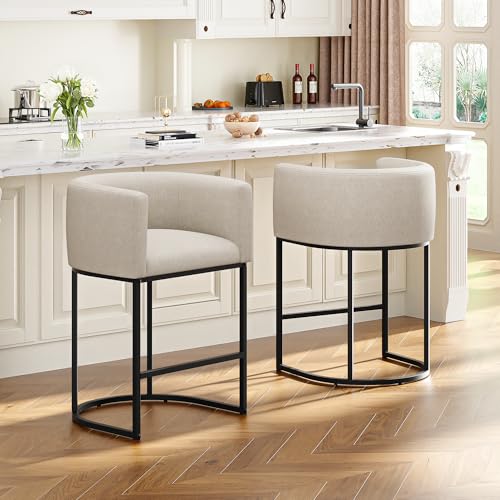
VATROS 26" H Counter Height Bar Stools Set of 2, Modern Barrel Counter Stools with Backrest and Arms, Linen Fabric Upholstered Accent Barstools for Kitchen Island,Support 450 LBS (Beige)

VATROS Counter Height Bar Stools Set of 3, 360° Swivel Upholstered Barstools with Backs and Metal Legs, 26" H Seat Height, Faux Leather in Black

Nalupatio Modern Bar Stools Set of 2, Adjustable Faux Leather Upholstered Swivel Bar Stools, Counter Height Bar Chairs with Back for Kitchen Island, Black
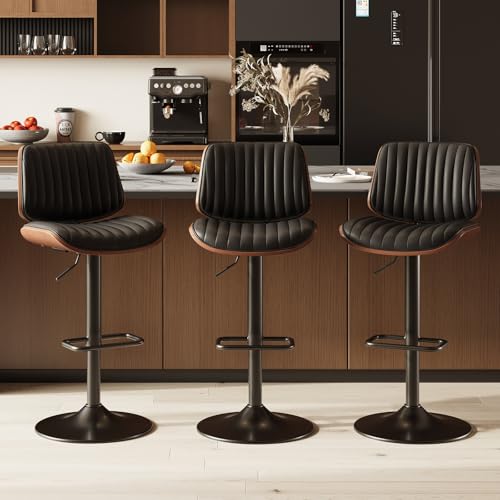
MALOL Bar Stools Set of 3, Adjustable Counter Height Bar Chairs 26"-34.5" with Swivel & Footrest, Modern Faux Leather Barstools for Kitchen Island, Dining Room,Pub,Black

VATROS Counter Height Bar Stools Set of 2, 360° Swivel Upholstered Barstools with Backs and Metal Legs, 26" H Seat Height, Linen Fabric in Beige

Signature Design by Ashley Caitbrook Swivel 30" Bar Height Bar Stool, Gray

VATROS Counter Height Bar Stools Set of 3, 360° Swivel Upholstered Barstools with Backs and Metal Legs, 26" H Seat Height, Linen Fabric in Gray
The Simple Answer: 24 to 26 Inches
If your counter measures 36 inches from the floor to the top of the countertop, you should shop for a counter height stool with a seat height between 24 and 26 inches. This is the standard for kitchen counters and kitchen islands across North America. Stools in this height range are specifically designed for 36 inch surfaces, and they are widely available in every style imaginable.
The reason this range works is simple: it creates the ideal clearance. When you sit on a 24 to 26 inch seat at a 36 inch counter, there is roughly 10 to 12 inches of space between the top of the seat and the underside of the counter. This gap gives you enough room for your legs to move freely, allows you to pull the stool in close without your knees hitting the counter, and positions your elbows at a comfortable height for eating and socializing. Whether you prefer backless bar stools for a clean look or full back bar stools for extra support, the 24 to 26 inch height is your target.
Why 10 to 12 Inches of Clearance Matters
The 10 to 12 inch clearance rule is not arbitrary. It is the result of decades of ergonomic research and standard furniture design. Getting this measurement right is the difference between a comfortable seating area and one you avoid using.
When the clearance is too small, meaning your stool is too tall for the counter, your thighs get pinched against the underside of the countertop. You cannot pull the stool in properly, so you end up leaning forward awkwardly, which strains your back and neck. When the clearance is too large, meaning your stool is too short, you have to reach up to the counter, which strains your shoulders and makes eating difficult. The 10 to 12 inch sweet spot solves both problems at once. If you are still deciding between different stool categories, our guide to bar stool types explains how counter height, bar height, and other categories differ.
The Complete Counter Height Chart
Use this reference table to quickly find the right stool height for your specific counter. While 36 inches is the most common kitchen counter height, it helps to see how other heights compare, so you can confirm you are buying the right category.
| Counter Height | Recommended Stool Seat Height | Category |
|---|---|---|
| 28 to 30 inches | 18 to 20 inches | Standard dining chair or low profile stool |
| 36 inches | 24 to 26 inches | Counter height stool |
| 42 inches | 28 to 30 inches | Pub height stool |
| 46 to 48 inches | 30 to 32 inches | Standing height stool |
Notice that 36 inches falls squarely in the counter height category. This is why the terms "counter stool" and "36 inch counter stool" are often used interchangeably. If you accidentally buy a pub height stool for a 36 inch counter, the seat will be 28 to 30 inches, which leaves only 6 to 8 inches of clearance. That is too tight and will feel cramped. Conversely, a low profile stool at 18 to 20 inches would leave 16 to 18 inches of clearance, forcing you to reach upward. Precision matters.
How to Measure Your Counter Correctly
Before you buy anything, confirm your counter height. Most kitchen counters are 36 inches, but it is worth verifying, especially if you have a custom kitchen island, a raised bar tier, or an older home with non-standard dimensions. Here is how to measure accurately:
- Use a tape measure. Measure from the floor to the top surface of the countertop. Do not measure to the underside of the counter.
- Measure at multiple points. Floors are not always perfectly level, and countertops can vary slightly. Take three measurements along the length of your counter and use the average.
- Account for flooring. If you plan to add a rug or mat under your stools, measure from the top of that surface, or add its thickness to your measurement. Even a half inch can affect comfort.
- Check for a raised bar tier. Some kitchen islands have a two-level design: a lower work surface at 36 inches and a raised eating bar at 42 inches. If your seating area is the raised tier, you need pub height stools instead.
If you are unsure about any part of the measuring process, our detailed stool measurement guide walks through every scenario, including how to measure for islands with overhangs and how to calculate how many stools will fit.
What About Counter Overhang?
The overhang, also called the seating overhang, is the portion of the countertop that extends beyond the base cabinetry. This is where your knees and legs go when you sit down. Standard seating overhangs are 12 to 18 inches deep. If your overhang is smaller than 12 inches, a stool with a large seat or a wide back may not fit properly, no matter what height it is.
When the overhang is shallow, consider backless stools or stools with a slim profile. These tuck under more easily and do not require as much knee space. Also pay attention to the depth of your stool seat. A seat depth of 15 to 17 inches is standard and works well with most overhangs. If you are working with a very tight space, our guide to small kitchen bar design offers layout strategies for compact areas.
Seat Height vs. Overall Height: A Critical Distinction
One of the most common buying mistakes is confusing seat height with overall height. When a product listing says "26 inch stool," it is almost always referring to the seat height, which is the measurement from the floor to the top of the seat cushion. The overall height, which includes the backrest, will be taller, often by 10 to 20 inches depending on the design.
For height matching purposes, always use the seat height. A stool with a 26 inch seat and a tall backrest still works perfectly at a 36 inch counter, because your body sits at the 26 inch level. The backrest extends upward behind you and does not interfere with the counter. This is why you should not reject a full back bar stool just because it looks tall in the photo. Check the seat height specification and trust that number.
Choosing Between 24 and 26 Inches
Both 24 and 26 inch seat heights work with a 36 inch counter, but they create slightly different experiences. Here is how to decide which is right for you:
24 Inch Seat Height
Provides 12 inches of clearance, which is the higher end of the recommended range. This gives more legroom and is a good choice for taller users or anyone who wants maximum freedom of movement. It also sits slightly lower, which can feel more relaxed and casual.
$80–$30025 Inch Seat Height
The middle ground. Offers roughly 11 inches of clearance, sitting perfectly within the ideal range. Many adjustable stools and mid-range models fall at this height. A safe, versatile choice if you are unsure.
$90–$35026 Inch Seat Height
Provides 10 inches of clearance, the lower end of the range. This positions you slightly higher relative to the counter, which some people find better for eating and reaching. It is also a good option for shorter users who want their elbows closer to counter height.
$85–$320Adjustable Height Stools
If you cannot decide, an adjustable stool that ranges from 24 to 26 inches, or wider, eliminates the guesswork. Models with a gas lift mechanism let you fine-tune the height to your exact preference, which is especially useful in households with users of different heights.
$100–$400Style and Comfort Considerations at This Height
Once you have confirmed the height, you can focus on style and comfort. Counter height stools at 24 to 26 inches come in every material and design, so you have plenty of room to match your kitchen's aesthetic.
For a warm, natural look, consider wooden bar stools that complement butcher block or wood cabinetry. For a sleek, contemporary feel, metal bar stools or modern bar stools with clean lines work beautifully. If you want a touch of luxury, leather bar stools or padded seat stools add comfort and sophistication. For a relaxed, farmhouse-inspired kitchen, rustic bar stools or industrial bar stools bring character.
Comfort features matter just as much as height. A footrest is essential at counter height because your feet should be supported, not dangling. This reduces pressure on your legs and improves posture. If your stools lack adequate cushioning, adding bar stool cushions is an easy upgrade that transforms the sitting experience. For kitchens used for long meals or entertaining, a stool with a contoured seat and a supportive backrest makes a noticeable difference.
Common Mistakes to Avoid
Even with the right measurements, it is easy to make a purchasing mistake. Here are the most common errors people make when buying stools for a 36 inch counter:
- Buying bar height instead of counter height. This is by far the most frequent mistake. Bar height stools are 28 to 30 inches and are meant for 42 inch bars. They will be too tall for a 36 inch counter.
- Ignoring the footrest height. A footrest that is too low or too high causes discomfort. It should fall at a natural resting position for your feet, roughly 8 to 10 inches below the seat.
- Forgetting to account for seat cushioning. A thick cushion compresses when you sit, effectively lowering your seat height. If you choose a heavily padded stool, a 26 inch seat may effectively become 25 inches when in use.
- Overlooking weight capacity. Always check the weight limit. Most counter stools support 250 to 300 pounds, but if you need more, look for heavy duty bar stools rated for higher loads.
- Not measuring the overhang. As mentioned earlier, a shallow overhang can prevent stools from tucking in properly, regardless of height.
If you want a comprehensive framework for evaluating any stool purchase, our stool buying essentials guide covers every factor to check before you buy.
Buying Tips and Where to Shop
Armed with the correct height, you are ready to shop. A few practical tips will help you get the best value and avoid returns:
- Read the specifications carefully. Confirm the seat height, not just the product name. Look for "seat height" in the product details.
- Check return policies. Even with careful measurement, stools can arrive and not suit your space. A generous return window, covered in our warranty and returns guide, gives you peace of mind.
- Consider assembly. Many stools require some assembly. Our delivery and assembly guide explains what to expect and how to prepare.
- Compare brands. Quality varies significantly. Use our brand comparison tool to see how different manufacturers stack up on durability, comfort, and value.
- Set a realistic budget. Quality counter stools for a 36 inch counter generally range from $80 to $400 per stool, depending on materials and features. If you are watching your spending, our stool on a budget guide shows where to save without sacrificing safety.
Whether you shop at online retailers or local furniture stores, the height rule remains the same. Get the measurement right, and everything else falls into place.
Frequently Asked Questions
What size bar stool do I need for a 36 inch counter?
You need a counter height stool with a seat height of 24 to 26 inches. This creates the recommended 10 to 12 inch clearance between the seat and the countertop. Most people find 25 or 26 inches to be the most comfortable for standard 36 inch kitchen counters.
Is a 24 inch or 26 inch stool better for a 36 inch counter?
Both work well. A 24 inch stool gives more legroom and a slightly more relaxed feel, while a 26 inch stool positions you closer to the counter, which some people prefer for eating. If you are taller, lean toward 24 inches. If you are shorter, 26 inches may feel better. An adjustable stool eliminates the dilemma entirely.
Can I use 30 inch bar stools on a 36 inch counter?
No. A 30 inch stool would leave only 6 inches of clearance, which is too tight. Your thighs would press against the underside of the counter, and you would not be able to sit comfortably. Thirty inch stools are designed for 42 inch bar height surfaces.
How many stools fit at a 36 inch counter?
Allow about 24 inches of width per stool for comfortable seating. For a 6 foot island, plan for 2 to 3 stools. For an 8 foot island, 3 to 4 stools. Always leave a few inches between stools so people have room to move. See our measurement guide for detailed calculations.
Does the seat height include the cushion?
Yes, the advertised seat height typically refers to the top of the seat surface, including any standard cushion. However, thick aftermarket cushions can add height, and heavily padded seats may compress slightly when sat upon. Factor this in if you plan to add or replace cushions.
Should I measure my counter or my island differently?
No, the measurement is the same: floor to the top of the seating surface. The key difference with islands is the overhang. Make sure your island has at least a 12 inch overhang on the seating side, or choose slim, backless stools that fit in a shallower space.
What if my counter is not exactly 36 inches?
Counter heights vary slightly, and 35 to 37 inches is common. Fortunately, the 24 to 26 inch stool range accommodates this. A 35 inch counter pairs well with 24 to 25 inch stools, while a 37 inch counter works best with 25 to 26 inch stools. The 10 to 12 inch clearance rule is your guide.
Conclusion
The answer to "what size bar stool for a 36 inch counter" is straightforward: choose a seat height of 24 to 26 inches. This delivers the ideal 10 to 12 inch clearance that makes sitting at your counter comfortable, functional, and enjoyable. Measure your counter to confirm its height, check the overhang depth, and then focus on style, materials, and comfort features.
With the right height locked in, you can shop with confidence, knowing that any stool in the 24 to 26 inch range will fit your counter properly. Explore our recommended options above to find quality counter height stools that match your kitchen's design. For a complete roadmap through the entire purchasing process, from measurement to final setup, our stool buying guides collection has everything you need to make a smart, lasting choice.